Category

Product

5 Key Web3 Trends in 2024

Web3 trends

2023 is behind us, and as we step into the new year, we’re faced with a fresh set of opportunities. The past year, dominated by a bear market, was a real test for the web3 ecosystem. We witnessed many projects struggling to stay afloat, while others not only survived but thrived by adding real value to the ecosystem. As we look ahead to 2024, it’s clear that the experiences of the past year have set the stage for new trends that are about to unfold. In this article, we’ll explore five key web3 trends that every product manager in the ecosystem should be aware of.

The year of identity

Identity - Dall.e

Identity – Dall·e

2024 is poised to be a crucial year for digital identity. For product managers working on services or applications that require authentication, focusing on decentralized identity management will be essential. This approach puts users in control of their data, allowing them to share only what is necessary for an application’s functionality. We can also expect a rise in the use of verifiable credentials, with Zero Knowledge proofs (ZK proofs) enabling the sharing of proof without revealing the underlying data. 

The benefits of decentralized identities and verifiable credentials are significant for both end-users and organizations. 

  • End-users gain ownership and control over their digital identities, enhancing their privacy. 
  • For organizations, these technologies enable quick verification of information, fraud prevention, increased data security, and reduced risk of cyber attacks, as sensitive data is not stored in their systems

This web3 trend extends beyond the domain of web3 developers and organizations. Public sector advancements are also evident:

In Switzerland, Partisia Blockchain and the University of Applied Sciences and Arts Western Switzerland (HES-SO Valais-Wallis) are collaborating on a decentralized electronic identity system, focusing on privacy and individual data control​​. Meanwhile, China is advancing its blockchain ambitions with the RealDID initiative, aiming to create a national-level real-name decentralized identity system​​. These developments reflect a global move towards more secure and user-controlled digital identities
If you are an Spanish speaker, i strongly recommend you this podcast from our Mighty Block series: “Descentralizando la identidad con web3

Regulatory Compliance and Governance

Regulations – Dall·e

Regulatory aspects, especially concerning the SEC and ETFs, are becoming increasingly important in the web3 space. As the industry matures, adherence to regulatory norms and governance standards is crucial for ensuring sustainable growth and user trust. Many countries already have some regulations or guidelines for Crypto space. 

Recent regulatory developments underscore this trends:

  • The European Union’s Market in Crypto Assets (MiCA) Regulation entered into force in June, with a final consultation on Europe-wide regulations to be published early in 2024, and member state mandates taking effect in 2025.(1)
  • Hong Kong released new guidelines for virtual asset trading platform operators in June 2023.(1)
  • Namibia passed its Virtual Assets Act in last July, with regulations pending.(1)
  • Last September, the New York Department of Financial Services (NYDFS) released proposed updates to its framework for token trading businesses to trade tokens and a changed framework for how it would put tokens on its “greenlist” (1)
  • Also in September 2023, Dubai’s Virtual Assets Regulatory Authority released regulations on virtual asset activity.(1)

For product managers in the web3 ecosystem, staying informed and compliant with these evolving policies and regulations is a must. It’s not just about creating secure experiences; it’s also about safeguarding our end-users from potential risks and ensuring our services align with this new regulatory landscape.

NFTs reloaded 

Bored Ape Reload for 2024 - Dall·e

Bored Ape Reload for 2024 – Dall·e

The NFT landscape in 2023 saw a slowdown, with collections like Bored Ape Yacht Club and Azuki Elementals experiencing significant drops in value. Marketplaces such as OpenSea and Blur responded to this bear market by reducing to try to maintain the interest on people and capture market share

In 2024 the expectation looks more promising, expanding NFT scope beyond just art. A key area of growth is in gaming, which, despite being in the early stages of web3 development, is increasingly integrating NFTs. These digital tokens are an essential part of gaming, providing players ownership of in-game assets, which can then be collected or traded in secondary markets.

As for projections, Blockworks suggests significant growth in the web3 gaming sector,

  • At least 2x growth in Web3 games overall (according to Jon Jordan’s Big Blockchain Games List, there are currently 1,037) as of Dec. 19, 2023. (2)
  • At least 3x growth in fully on-chain games (according to Jon Jordan’s Big Blockchain Games List, there are currently 54) as of Dec. 19, 2023. (2)

Even if this is not as evolved as gaming, other usage is traceability of physical assets. The transparent blockchain ledger effectively tracks the ownership history of an NFT, bolstering authenticity and provenance.

Consequently, NFTs stand poised to revolutionize the realm of real-world asset ownership and management. In the future, utilizing NFTs could span a wide spectrum of assets, such as art, collectibles, real estate, and even securities.

Web3 onboarding using web2 scalable solutions

Onboarding from web2 to web3 - Dall·e

Onboarding from web2 to web3 – Dall·e

To truly mainstream web3 and welcome the next billion users, it’s crucial we shift our focus towards a wider audience. Sure, in the web3 space, we’re all about privacy and security – the whole ‘not your keys, not your assets’ mindset. But let’s be real: this appeals more to the early birds and tech enthusiasts who are willing to dive deep. 

To grow our ecosystem and make it robust, our game plan should include attracting people, guiding them step-by-step, and gradually unveiling the myriad possibilities of web3.

This year is going to be all about seamless onboarding. As product managers, we need to analyze the onboarding process. How can we borrow and adapt what worked in web2 to make web3’s decentralization more gradual and user-friendly? Our goal here is to ensure our users feel at ease and build confidence in navigating through this new tech landscape. 

Blockchain meets AI? 
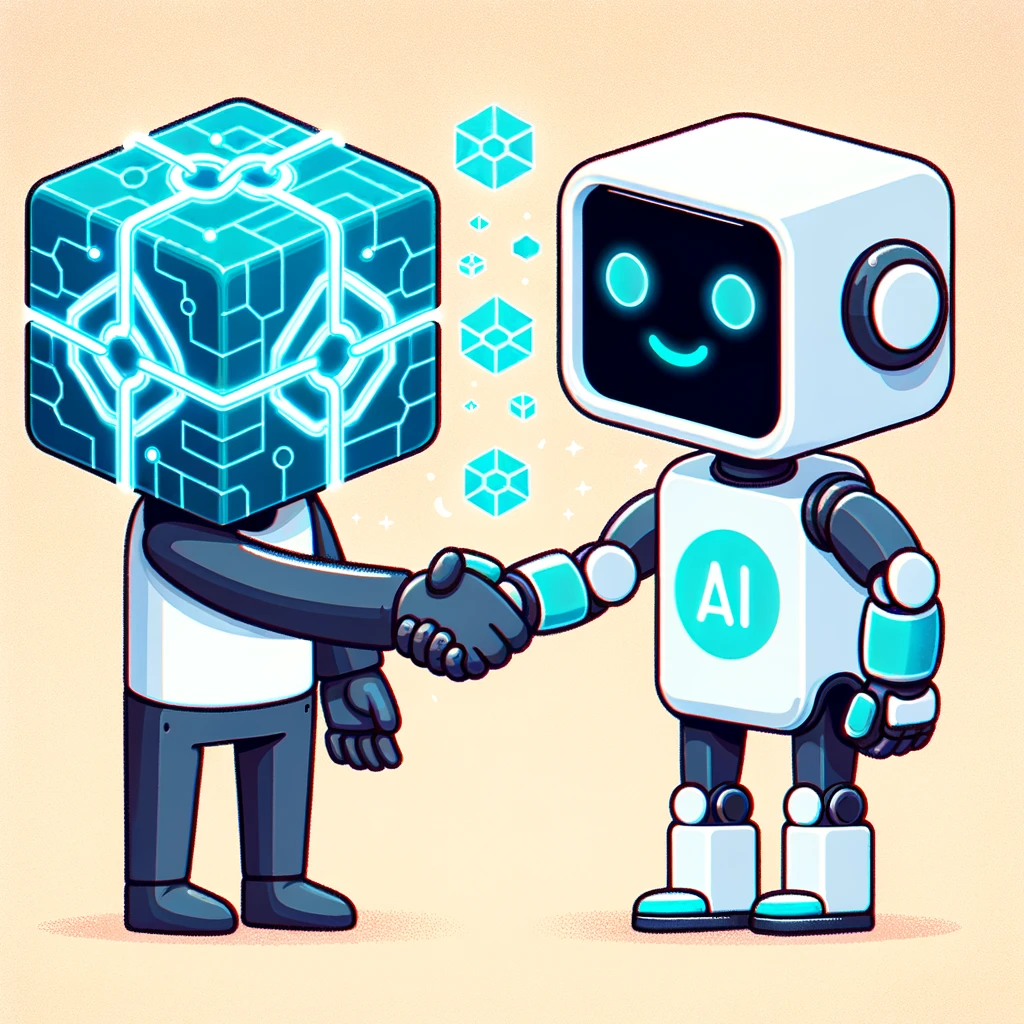
The Blockchain meets the AI - Dall·e

The Blockchain meets the AI – Dall·e

2023 was, without doubt, the year of AI. When this phenomenon appeared in our lives, we started to think about how to collaborate with the decentralized ecosystem. Is blockchain and AI something that naturally is going to work together? According to Vitalik, in the Podcast La Ultima Frontera, “…A lot of people want to be a connection and it’s sometimes hard to find a really big and deep one. There are definitely some smaller ones, for example ZKML (Zero Knowledge Machine Learning)” 

Does this mean that as Product Manager we don’t need to worry about this? Well, actually the IA is an incredible tool to help us to improve our products, accelerating the research, helping to brainstorm, or as a simple assistant in our daily operative tasks. So even if there is not an immediate correlation between web3 and AI, is definitely one between what we can achieve using this tool to enhance the ecosystem with our products.

Web3 trends Takeaways

In summary, 2024 for web3 Product Managers is about embracing innovation responsibly, focusing on user empowerment, navigating the evolving regulatory environment, broadening the utility of NFTs, simplifying onboarding, and exploring the synergies between AI and blockchain; to create a safer, more inclusive, and vibrant web3 ecosystem.


(1) Source: Bloomberg Law 2024 – Regulatory & Compliance

(2) What to expect for Web3 in 2024

The best time management framework for makers

Time Management

Organizations spend roughly 15% of their time on meetings, with surveys showing that 71% of those meetings are considered unproductive. Unproductive meetings cost around 37 billion dollars per year, and 24 billion dollars are lost in work hours. One reason programmers dislike meetings so much is that they’re on a different type of schedule from other people. Meetings cost them even more. When you’re operating on the maker’s schedule, meetings are a disaster. A single meeting can blow a whole afternoon, by breaking it into two pieces each too small to do anything hard in. Plus you have to remember to go to the meeting.Understanding this made us realize that we needed a new way of managing our teams’ time at Mighty Block.

zippia.com

So, we used the following questions as a guideline to create a time management for our software developers team framework:

  • How do I reach my peak productivity?
  • Is multitasking effective?
  • How to avoid distractions and manage time efficiently?
  • What’s the best way to organize my schedule?
  • What to do with goal-less meetings?
  • How to handle meetings where I see no value?
  • How to prevent distractions and stay focused?

Limitations of body & mind

Before diving into the framework we designed, it’s important to understand how our mind works, what’s possible and what’s not.

This section is important because it’s common to read, specially in Twitter/X, about the Hustle Culture, the mentality that one must work all day every day in pursuit of their professional goals. However, we must acknowledge that when we are not connected to our body and emotions, we are at risk of burning out.

Is multitasking effective?

Multitasking Myth

Multitasking reduces cognitive capacity

What our brains are doing when we multitask is rapidly switching between tasks. This constant switching taxes our brain. It essentially tires it out and makes it less efficient. This particularly affects our ability to focus our attention in general, even when we are not multitasking. 

Multitasking makes us more distractible and prone to errors. For example, individuals rated as high media multitaskers (number of hours using multiple devices simultaneously, such as watching TV while also using a smart phone or tablet) showed poorer attention on cognitive tasks. 

Those individuals had to use more of their brain to complete the same task compared to low multitaskers. When you need to recruit more of your brain to complete a task, it means your brain is working less efficiently.

Multitasks
Multitasking: Why Your Brain Can’t Do It and What You Should Do About It – MIT

Daily cognitive budget

As Sam Altman explains in this interview, there is a daily cognitive budget of 8 high quality hours we can use before the output quality starts to decline. Put in another way: no human being can spend more than 8 hours in a day working at a high performance.

Sleep

According to the sleep researcher Matt Walker, only 1-3% of the population can operate normally with only 4 hours of sleep. Unless you are in this privileged group, you need at least 7 hours of good sleep per night.

In case you are curious on how to improve your sleep habits, check out this article.

Sleeps elite

A prioritization framework

Once we have improved our performance related to both body and mind, we can begin to think strategically about how we manage our time.

This time management framework for software developers was created based on reading, iterations, and collective experiences of the team (although we think it’s useful for any modern worker).

Prioritization framework

1. Get the important things done

  • There should never be more than 2 mission-critical items to complete each day. 
  • Do them separately from start to finish without distraction
  • Extreme focus blocks (minimum 2 hours)

2. Don’t waste time

In this modern age, we are bombarded all day long, specially from Monday to Friday, by companies using multiple channels to capture our attention. Additionally, content is getting more and more addicting and our dopamine system is being hacked.

Take a look at this list:

  • Checking email in real-time
  • Receiving WhatsApp, Signal, Telegram, SMS notifications from groups, family, co-workers and sales representatives
  • “Breaking News” that seem to be important (99% of the time they are not)
  • TikTok videos
  • Tweeter drama
  • Instagram stories
  • This list is endless…

3. Make lots of lists

We highly recommend making lists. Lists keep you focused, and you can review them periodically, reminding yourself of what’s important (and what’s not). They free up space in your mind—fewer things to memorize.

  1. Of the 3 tasks I need to finish today
  2. Of my goals for the quarter
  3. Of my goals for the year
  4. Of the books I want to read this year
  5. Of the goals with my partner

Lists keep you focused; you can review them anytime.

Additional tip! Visual Setup

  • The browser tabs are your best friend.
  • When focused on a Google Doc, keep it open, collapse the rest into groups.
  • While in a Goole Meet, leave it open, collapse the rest.
  • While coding, maximize the IDE, minimize the rest.
  • Disable desktop notifications for Slack, Email, WhatsApp.
  • Close WhatsApp web when focused on Meet, Google Doc, Coding.

Meetings: Do Them Right or Don’t Do Them at All

If within your role, you still have to organize or attend meetings, there are some rules that can help make them more efficient and productive. However, it’s important that you adhere to and encourage the team to follow them as well.

Meeting tips

meeting tips

L10 meeting: an efficient format for management roles

As part of the Entrepreneurial Operating System® (EOS®), the Level 10 Meeting (L10) creates a standard structure for productive meetings. No, really. EOS lays out a template for team meetings to focus on the most important things each week without the nonsense.

On a scale of 1 to 10, most people would rank their current meetings at a 4 or 5. In some cases, even that’s being generous. In a Level 10 Meeting, attendees focus on the most important topics to spot issues before they become bigger problems. But that doesn’t come naturally (as evidenced by the prevalence of crappy meetings). To get there, companies Running on EOS™ use the standardized L10 agenda.

What makes a L10 meeting so effective?

Because Level 10 meetings operate at a repeatable, strategic level, they provide a solid framework covering material that matters. Opinions and politicking have no place in a meeting that focuses strictly on objectives and metrics. Teams also learn to minimize tangents and sidebar conversations to cover only what matters.

In addition, the same two individuals (or their proxies during vacations) serve as the facilitator and the scribe for every meeting. This removes the question, “Who’s leading this meeting?” The same goes for the scribe role: Everyone already knows who’s taking notes. Removing this ambiguity saves precious minutes discussing and agreeing to roles in each meeting.

If you are interested in learning more about L10 and EOS, check out this article.

Please let us know if you enjoy this time management tips for software developers!

L10: The most efficient meeting

Building a Start Up Culture of Growth

Building a start up

In this article, we aim to share our approach to personal development and the cultivation of a robust start up culture, which has transformed us into a high-performance team deeply rooted in our core values.

With the management team, we had a vision: a high-performing team with strong bonds that would enable us to uphold open and honest communication. It may sound like a lot because it wasn’t a feature we could simply develop and consider “done”; it required us to embrace learning and experience some discomfort.

Core concept for a start up culture

We selected the concept coined by Carol Dweck, the ‘Growth Mindset,’ as the central theme for the year. 

In essence, the concept introduced by Carol Dweck can be summarized as follows: Individuals who believe in the potential for their talents to develop through hard work, effective strategies, and input from others possess a growth mindset. They tend to achieve more than those with a fixed mindset who believe their talents are innate gifts. This is because those with a growth mindset worry less about appearing intelligent and invest more energy into the process of learning.

When entire companies embrace a growth mindset, their employees report feeling significantly more empowered and committed. Additionally, they receive increased organizational support for collaboration and innovation. In contrast, individuals in companies primarily rooted in a fixed mindset tend to report more instances of cheating and deception among employees, presumably as an attempt to gain an advantage in the talent competition.

Fixed Mindset vs Growth Mindset
source: lifehack.org


We chose this concept to serve as our guiding principle whenever our team faced an obstacle. The first thing we did was to share it with the team and reinforce it in every conversation opportunity. When designing the training for team leads, we knew it was crucial to rely on this concept to implement the changes and improvements we envisioned for our ‘Clarity Break’ training.

Victim or player?

But how did we first come to embrace this concept? We have a Friday tradition that has been with us since the first day of Mighty Block: Crypto Research. Originally, it was a forum where we discussed various topics related to crypto that had been researched. This was crucial in the early days of the company when the crypto industry was rapidly expanding, and our team was relatively new to blockchain. It was essential to stay updated on all the latest developments.

However, recently, it became tedious to find a NEW topic for research related with crypto. We would prepare it without enthusiasm, procrastinate, and so on.

Viktor Frankl

To address this issue, we began to contemplate the two models, framed by the ‘victim vs. protagonist’ dichotomy introduced by Freddy Coffman. What does a victim do when they don’t like Crypto Research? They complain, get frustrated, and kick it – were some of the responses we received. 

On the other hand, as protagonists, we seized an opportunity during a workshop we held in Cordoba. Together, we designed a new format, made commitments, and implemented the change. We would no longer confine ourselves to a single topic (crypto), but instead, we would include subjects that positively impact our daily lives. Additionally, we could invite guests and introduce special editions featuring panel discussions. Change the name help us to not limited ourselves and give to  “the mighty show” a new beginning

Cordoba Workshop 2023
The team working in Cordoba Workshop

Open and Honest Feedback

In order to learn from each other, take more risks, and grow as a team, we needed to ensure that we had the skills to provide feedback in an open and honest manner. That’s why it was essential to dedicate time during the workshop we held in Buenos Aires to discuss those ‘monsters’ that make us hesitant when it comes to giving feedback.

Feedback monsters
The monsters Mb team draw

Fears of having to take on extra tasks, fear of hurting someone else’s feelings, fear of being wrong in my assessment, among others – identifying these fears helped us. We created actions in collaboration with the leads to ‘combat’ them and encourage each other to embrace the open and honest mindset. Later, during a virtual discussion, we explored the best tips for effective communication when giving feedback. We reviewed do’s and don’ts to enhance our feedback process.

Learning from Mistakes

Mistakes are a fundamental source of learning in a start up culture, and we’ve been discussing what happens to us when we make mistakes, the emotions and feelings we experience, and how we can make the most out of our errors. In a special session of our Friday “Mighty Block Show”, we learned that the key to evolving from the traditional concept of failure is not to view success and failure as a binary but to incorporate them into the learning process.

We shared our experiences with error and took away some key insights: When we’re trying to resolve an error, it’s beneficial to take a moment to clear our minds, seek help, and breathe. When someone shares a problem or mistake they’ve encountered, it’s essential to assist and make them feel comfortable and supported. We emphasized not getting caught up in the mistakes – they don’t define us.

John Wooden - mistakes

Strong Growth Workshop – Key Takeaways

At our start up culture, we have a unique tradition. Every quarter, we come together as a team for an entire week. During our recent gathering, we revisited the invaluable lessons we’ve learned throughout the year.

With the theme of ” Strong Growth” in mind, we approached our learning experience in a playful way. We incorporated various games to enhance our understanding of these lessons. We recognized that mistakes are an integral part of the learning process; they are the stepping stones to success. We also acknowledged the value of maintaining a player’s attitude – being open to new challenges and eager to explore uncharted territories. We also learned that frustration and expectations often go hand in hand. By acknowledging this fact, we can navigate our professional journeys with greater resilience and a clear perspective.

One of the most exciting outcomes of our learning journey was the construction of a Jenga tower. This tower, where each block represented our learnings and experiences, serves as a symbol of our team’s commitment to growth and our evolving organizational start up culture. It visually represents how we stack our achievements, learn from our failures, and build a stronger and more resilient team.

Start up culture learnings
Mighty Block learning tower

Incorporating playful learning into our professional development has not only made our quarterly gatherings more enjoyable but has also proven to be an effective way to drive our team’s personal and collective growth. We look forward to the upcoming quarters with renewed enthusiasm, ready to embrace the challenges and successes!

Check out this video with our experience in the last workshop.